|

|
|

What they were like
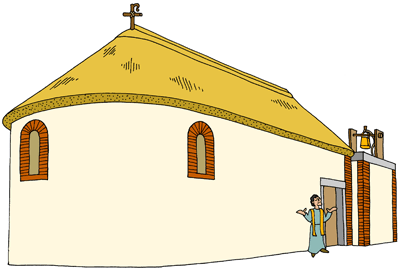
- Some Roman churches kept
going in Britain after the Romans
left.
- They might be single
roomed buildings.
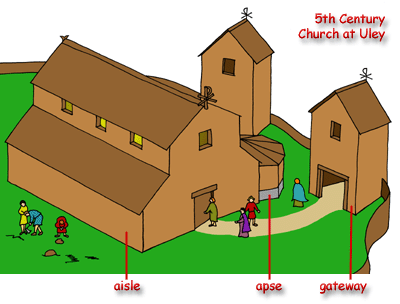
- They might be
'aisled' buildings with columns down the centre and open
corridors on either side, like churches today (but without
a tower).
- There might also be
an apse (a room shaped like half a circle) around the
altar at the east end (see picture above).
- They could be built
of wood or of stone.
- The roofs could be
covered in thatch, wooden shingles or clay tiles.
- They often had
circular or oval churchyards.
- Archaeologists have dug
up the remains of a Romano-British aisled church at Uley in
Gloucestershire (see picture below). It replaced an old pagan temple and was used
until sometime in the 6th century.
- Old pagan temples were
often turned into churches; or they were taken down and small
churches built nearby: like at Brean Down and Lamyatt Beacon
in Somerset.
- Many Roman churches were
in towns. They were not used much and fell down because town
life wasn't very popular any more.
- In cemeteries, there
were sometimes big Roman tombs called 'mausolea' (the
plural of 'mausoleum'). They
were like small stone buildings and the British sometimes
turned them into churches. St. Albans Cathedral is a good
example.
- Some churches and
chapels were open to everyone. Others belonged to monks
or nuns in a monastery
or to hermits living on their own.
- Activity
Sheets available.
|




